From spreadsheets to auditable data quality: How SSEN Transmission built regulatory-ready data governance
SSEN Transmission eliminated manual data reconciliation, achieved 99% cross-system asset consistency for a priority dataset, and built a continuously monitored data quality foundation to support Ofgem compliance and future AI initiatives.
| Industry | Energy / Utilities |
| Location | United Kingdom |
| Regulator | Ofgem |
| Investment scope | £29bn clean energy program |
| Solution | Ataccama ONE (Data Quality, Data Catalog, Business Glossary) |
| Key result | 99% cross-system data consistency for priority dataset (15% improvement in months) |
Key takeaways
- SSEN Transmission replaced spreadsheet-based data governance with Ataccama ONE, giving 100+ data stewards across 45 domains access to a single platform for data quality management and cataloging, with onboarding continuing over time.
- For a priority substation dataset, cross-system consistency between critical asset management systems (Maximo and ArcGIS) improved by 15 percentage points, reaching 99%.
- Staff reported spending 20–30% of their time searching for, reconciling, and verifying data. Ongoing automated monitoring will help eliminate much of that manual work.
- The operator can now demonstrate Ofgem’s Data Best Practice requirements with documented ownership, measurable quality scores, and evidence of ongoing improvement.
- A governed, auditable data foundation is now in place to support predictive analytics, automation, and future AI initiatives in a regulated environment.
Results at a glance
99%
Cross-system asset data consistency (Maximo → ArcGIS)
+15%
Consistency improvement (Maximo → ArcGIS)
100+
Data stewards across 45 domains onboarding to the platform
20-30%
Staff time previously spent reconciling data
2,000+
Key data assets now continuously monitored
7
Business areas operating from a shared data catalog
About SSEN Transmission
SSEN Transmission (SSENT) is responsible for maintaining and investing in the high voltage electricity transmission network in the North of Scotland. Their network of underground and subsea cables, overhead lines and electricity substations extends over a quarter of the UK’s land mass, crossing some of its most challenging terrain.
As a regulated operator under Ofgem, SSEN Transmission is managing a £29bn clean energy investment program. Their RIIO-T3 business plan is more than a regulatory framework; it’s a historic milestone for SSEN Transmission and the UK’s energy evolution.
From April 2026 to March 2031, they will deliver the critical infrastructure needed for a cleaner, more secure, and affordable energy system to transform their network at pace. The network is projected to deliver 15% of the carbon reduction required to meet Scotland’s 2050 Net Zero targets.
That scale, combined with rising regulatory expectations around data governance, made improving data quality a business-critical priority.
The challenge: No single source of truth
Ask the SSEN Transmission data team a fundamental business asset question – “How many substations do we have?” and you’d get different answers depending on who you asked and which system they checked.
The root cause was a data management infrastructure that had not kept pace with the organization’s growth. There was no dedicated data catalog, no automated data quality tooling, and no centralized business glossary. Instead, governance relied on spreadsheets: point-in-time snapshots that were difficult to scale and impossible to continuously monitor.
The practical consequences were significant:
- Core asset register systems – including Maximo and ArcGIS – were poorly integrated and regularly returned conflicting data. Teams manually cross-checked records and repeated validation work in parallel.
- More than 2,000 key data assets were tracked in spreadsheets, meaning issues were discovered only after they had already influenced decisions downstream.
- An internal survey found staff were spending 20–30% of their working time searching for the right data, reconciling differences between sources, or trying to determine which version to trust.
- Without a defined data catalog or ownership structure, SSEN Transmission could not demonstrate compliance with Ofgem’s Data Best Practice principles.
For a transmission operator executing a £29bn clean energy program under active regulatory scrutiny, this was not a sustainable situation.
The solution: A unified platform for data quality and governance
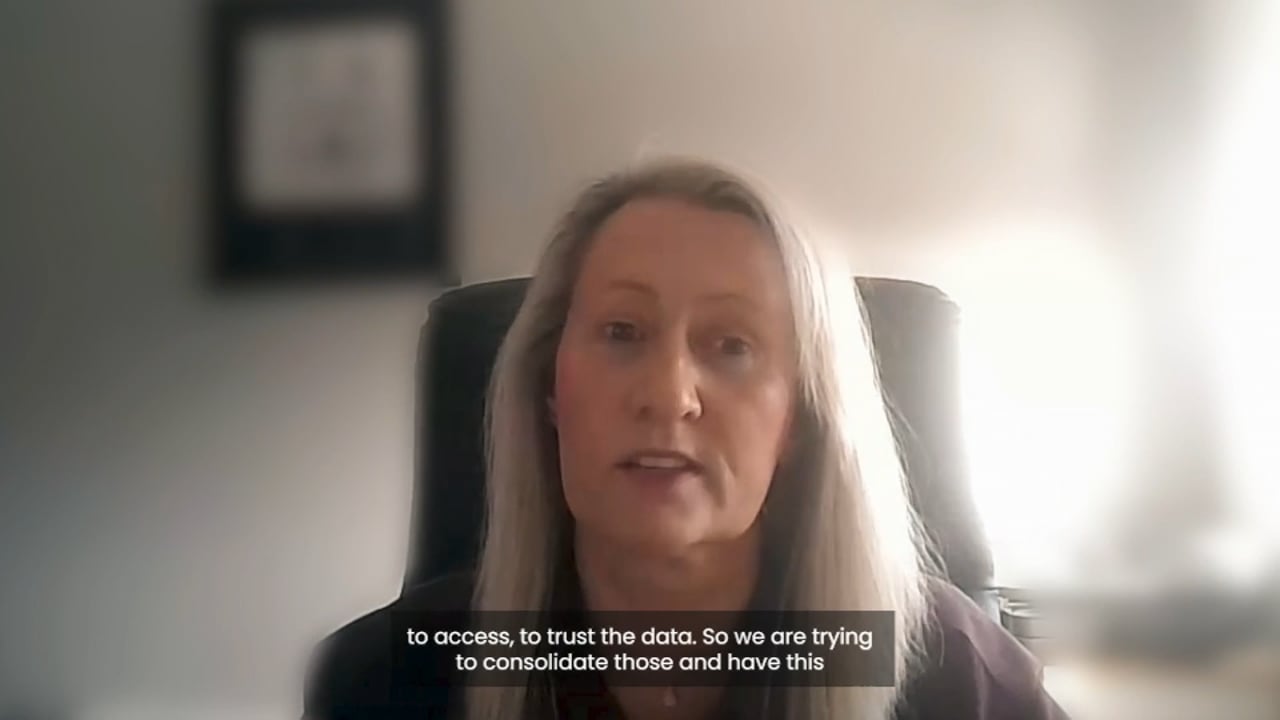
SSEN Transmission had already established a governance accountability model with defined data owners and stewards. What it lacked was the technology to operationalize it at scale. Senior Data Product Analyst Susan Spence led the evaluation of platforms that could bring data quality monitoring, cataloging, and glossary management into a single environment.
After a proof of concept, SSEN Transmission selected Ataccama ONE for three reasons:
- Low-code usability: Visual monitoring and reporting that business users and data stewards could adopt without deep technical expertise.
- Flexible rule management: Complex data quality rules could be defined once and applied consistently across datasets and systems.
- Integrated catalog and quality: Rather than managing metadata and data quality checks in separate tools, SSEN Transmission could link business terms directly to data attributes and quality scores within a single platform.
That last point was decisive. Having the business glossary, data catalog, and data quality monitoring unified in Ataccama ONE meant that data stewards had one place to find, understand, track, and improve data, rather than switching between systems and maintaining parallel records.
The implementation covered seven business areas, 27 departments, and 45 data domains, with more than 100 data stewards now having access to the platform and onboarding continuing over time.
— Susan Spence, Senior Data Product Analyst, SSEN Transmission
SSEN Transmission’s partnership with Ataccama extends beyond the platform. Susan Spence is a member of Ataccama’s Customer Advisory Board, contributing to and drawing from a community of data leaders navigating similar data trust opportunities and challenges across industries.
What SSEN Transmission uses in Ataccama ONE
- Data Quality: Rules engine, monitoring, profiling, scheduled checks, anomaly detection
- Data Catalog: 45 domains, searchable across 7 business areas
- Business Glossary: Standardized terms replacing spreadsheet-based definitions
The results: Measurable data trust and regulatory readiness
99% Cross-system (Maximo → ArcGIS) consistency for targeted dataset
SSEN Transmission’s most immediate data quality challenge was inconsistency in asset records across systems. As part of a wider integration initiative, the team built a master substation list, a golden record covering 14 mandatory attributes, and used Ataccama ONE to compare those attributes against Maximo and ArcGIS.
Within a few months, cross-system consistency reached 99%, a 15 percentage point improvement. This is no longer a manual exercise: the monitoring is automated, repeatable, and transparent to leadership.
— Alex Stuart, Head of Data Management, SSEN Transmission
Eliminated manual reconciliation
Where teams previously spent 20–30% of their time searching for, comparing, and validating data, they can now use continuous automated monitoring to surface issues. Data stewards can see live quality scores, trend data, and anomaly alerts, and act before problems reach downstream systems or decisions.
A foundation for regulatory assurance
Ofgem’s Data Best Practice framework requires energy operators to demonstrate clearly governed data domains, defined ownership and stewardship, and measurable evidence of improvement over time. SSEN Transmission can now demonstrate all of these requirements.
For the first time, the business has continuously monitored data quality scores, documented ownership, and an auditable improvement record — not a manual snapshot, but an ongoing capability. Ahead of its next regulatory review, the team is expanding platform access and embedding data quality further into day-to-day business operations.
Ofgem requirements SSEN Transmission can now evidence:
- Defined data ownership and stewardship across 45 domains
- Active, automated data quality management processes
- Consistent metadata and standardized business definitions
- Measurable monitoring across the full data catalog
- Documented evidence of ongoing quality improvement
- 700 datasets cataloged in their Dataset Directory with Dublin Core metadata standard elements
Looking ahead: AI on a foundation of trusted data
SSEN Transmission’s data quality program is already incorporating AI-assisted capabilities within Ataccama ONE: accelerated rule creation, automated anomaly detection, and observability tooling that monitors schema changes more effectively.
But the longer-term priority is preparing for AI adoption across the business. In regulated environments, predictive analytics, automation, and agentic workflows are only as reliable as the data that drives them. By establishing auditable, continuously monitored data quality today, SSEN Transmission is building the foundation that future AI will require.
— Susan Spence, Senior Data Product Analyst, SSEN Transmission
Manual data reconciliation, cross-system inconsistencies, and lack of a single source of trust to fuel regulatory compliance and future AI initiatives.
Implemented Ataccama ONE to give data stewards a single place to find, understand, track, and improve data.
Measurable data trust, a foundation for regulatory assurance, and 99% cross-system consistency.
SSEN Transmission eliminated manual data reconciliation, achieved 99% cross-system asset consistency for a priority dataset, and built a continuously monitored data quality foundation to support Ofgem compliance and future AI initiatives.
| Industry | Energy / Utilities |
| Location | United Kingdom |
| Regulator | Ofgem |
| Investment scope | £29bn clean energy program |
| Solution | Ataccama ONE (Data Quality, Data Catalog, Business Glossary) |
| Key result | 99% cross-system data consistency for priority dataset (15% improvement in months) |
Key takeaways
- SSEN Transmission replaced spreadsheet-based data governance with Ataccama ONE, giving 100+ data stewards across 45 domains access to a single platform for data quality management and cataloging, with onboarding continuing over time.
- For a priority substation dataset, cross-system consistency between critical asset management systems (Maximo and ArcGIS) improved by 15 percentage points, reaching 99%.
- Staff reported spending 20–30% of their time searching for, reconciling, and verifying data. Ongoing automated monitoring will help eliminate much of that manual work.
- The operator can now demonstrate Ofgem’s Data Best Practice requirements with documented ownership, measurable quality scores, and evidence of ongoing improvement.
- A governed, auditable data foundation is now in place to support predictive analytics, automation, and future AI initiatives in a regulated environment.
Results at a glance
99%
Cross-system asset data consistency (Maximo → ArcGIS)
+15%
Consistency improvement (Maximo → ArcGIS)
100+
Data stewards across 45 domains onboarding to the platform
20-30%
Staff time previously spent reconciling data
2,000+
Key data assets now continuously monitored
7
Business areas operating from a shared data catalog
About SSEN Transmission
SSEN Transmission (SSENT) is responsible for maintaining and investing in the high voltage electricity transmission network in the North of Scotland. Their network of underground and subsea cables, overhead lines and electricity substations extends over a quarter of the UK’s land mass, crossing some of its most challenging terrain.
As a regulated operator under Ofgem, SSEN Transmission is managing a £29bn clean energy investment program. Their RIIO-T3 business plan is more than a regulatory framework; it’s a historic milestone for SSEN Transmission and the UK’s energy evolution.
From April 2026 to March 2031, they will deliver the critical infrastructure needed for a cleaner, more secure, and affordable energy system to transform their network at pace. The network is projected to deliver 15% of the carbon reduction required to meet Scotland’s 2050 Net Zero targets.
That scale, combined with rising regulatory expectations around data governance, made improving data quality a business-critical priority.
The challenge: No single source of truth
Ask the SSEN Transmission data team a fundamental business asset question – “How many substations do we have?” and you’d get different answers depending on who you asked and which system they checked.
The root cause was a data management infrastructure that had not kept pace with the organization’s growth. There was no dedicated data catalog, no automated data quality tooling, and no centralized business glossary. Instead, governance relied on spreadsheets: point-in-time snapshots that were difficult to scale and impossible to continuously monitor.
The practical consequences were significant:
- Core asset register systems – including Maximo and ArcGIS – were poorly integrated and regularly returned conflicting data. Teams manually cross-checked records and repeated validation work in parallel.
- More than 2,000 key data assets were tracked in spreadsheets, meaning issues were discovered only after they had already influenced decisions downstream.
- An internal survey found staff were spending 20–30% of their working time searching for the right data, reconciling differences between sources, or trying to determine which version to trust.
- Without a defined data catalog or ownership structure, SSEN Transmission could not demonstrate compliance with Ofgem’s Data Best Practice principles.
For a transmission operator executing a £29bn clean energy program under active regulatory scrutiny, this was not a sustainable situation.
The solution: A unified platform for data quality and governance
SSEN Transmission had already established a governance accountability model with defined data owners and stewards. What it lacked was the technology to operationalize it at scale. Senior Data Product Analyst Susan Spence led the evaluation of platforms that could bring data quality monitoring, cataloging, and glossary management into a single environment.
After a proof of concept, SSEN Transmission selected Ataccama ONE for three reasons:
- Low-code usability: Visual monitoring and reporting that business users and data stewards could adopt without deep technical expertise.
- Flexible rule management: Complex data quality rules could be defined once and applied consistently across datasets and systems.
- Integrated catalog and quality: Rather than managing metadata and data quality checks in separate tools, SSEN Transmission could link business terms directly to data attributes and quality scores within a single platform.
That last point was decisive. Having the business glossary, data catalog, and data quality monitoring unified in Ataccama ONE meant that data stewards had one place to find, understand, track, and improve data, rather than switching between systems and maintaining parallel records.
The implementation covered seven business areas, 27 departments, and 45 data domains, with more than 100 data stewards now having access to the platform and onboarding continuing over time.
— Susan Spence, Senior Data Product Analyst, SSEN Transmission
SSEN Transmission’s partnership with Ataccama extends beyond the platform. Susan Spence is a member of Ataccama’s Customer Advisory Board, contributing to and drawing from a community of data leaders navigating similar data trust opportunities and challenges across industries.
What SSEN Transmission uses in Ataccama ONE
- Data Quality: Rules engine, monitoring, profiling, scheduled checks, anomaly detection
- Data Catalog: 45 domains, searchable across 7 business areas
- Business Glossary: Standardized terms replacing spreadsheet-based definitions
The results: Measurable data trust and regulatory readiness
99% Cross-system (Maximo → ArcGIS) consistency for targeted dataset
SSEN Transmission’s most immediate data quality challenge was inconsistency in asset records across systems. As part of a wider integration initiative, the team built a master substation list, a golden record covering 14 mandatory attributes, and used Ataccama ONE to compare those attributes against Maximo and ArcGIS.
Within a few months, cross-system consistency reached 99%, a 15 percentage point improvement. This is no longer a manual exercise: the monitoring is automated, repeatable, and transparent to leadership.
— Alex Stuart, Head of Data Management, SSEN Transmission
Eliminated manual reconciliation
Where teams previously spent 20–30% of their time searching for, comparing, and validating data, they can now use continuous automated monitoring to surface issues. Data stewards can see live quality scores, trend data, and anomaly alerts, and act before problems reach downstream systems or decisions.
A foundation for regulatory assurance
Ofgem’s Data Best Practice framework requires energy operators to demonstrate clearly governed data domains, defined ownership and stewardship, and measurable evidence of improvement over time. SSEN Transmission can now demonstrate all of these requirements.
For the first time, the business has continuously monitored data quality scores, documented ownership, and an auditable improvement record — not a manual snapshot, but an ongoing capability. Ahead of its next regulatory review, the team is expanding platform access and embedding data quality further into day-to-day business operations.
Ofgem requirements SSEN Transmission can now evidence:
- Defined data ownership and stewardship across 45 domains
- Active, automated data quality management processes
- Consistent metadata and standardized business definitions
- Measurable monitoring across the full data catalog
- Documented evidence of ongoing quality improvement
- 700 datasets cataloged in their Dataset Directory with Dublin Core metadata standard elements
Looking ahead: AI on a foundation of trusted data
SSEN Transmission’s data quality program is already incorporating AI-assisted capabilities within Ataccama ONE: accelerated rule creation, automated anomaly detection, and observability tooling that monitors schema changes more effectively.
But the longer-term priority is preparing for AI adoption across the business. In regulated environments, predictive analytics, automation, and agentic workflows are only as reliable as the data that drives them. By establishing auditable, continuously monitored data quality today, SSEN Transmission is building the foundation that future AI will require.
— Susan Spence, Senior Data Product Analyst, SSEN Transmission