The Forrester Wave™: Data Quality Solutions, 2026: How to read it and why it matters now
For enterprise data leaders, the Forrester Wave™ is not just a market snapshot. It is one of the few analyst research formats explicitly built to support real technology decisions, the kind that shape platform strategy, operating models, and long-term risk.
In the context of data quality, this matters more than ever.
As organizations scale analytics, automation, and AI initiatives, data quality has shifted from a supporting capability to a foundational requirement. When data quality fails, AI, agents, and analytics fail. When AI, agents, and analytics fail, problems are amplified at machine speed. The Forrester Wave™ for Data Quality Solutions is designed to help buyers understand which vendors can provide data quality at enterprise scale so they can truly be AI-ready.
If you’re evaluating vendors, use this guide to interpret the Wave graphic, understand Forrester Wave™ categories, and translate criteria into a shortlist.
What the Forrester Wave™ is and what it is not
The Forrester Wave™ is a comparative evaluation of vendors in a defined technology market, built on a transparent and criteria-driven methodology.
Each Wave report evaluates vendors across three dimensions:
- Current offering, how strong the product is today based on generally available capabilities
- Strategy, how credible and differentiated the vendor’s future direction is
- Customer feedback, how customers rate real-world usage and outcomes
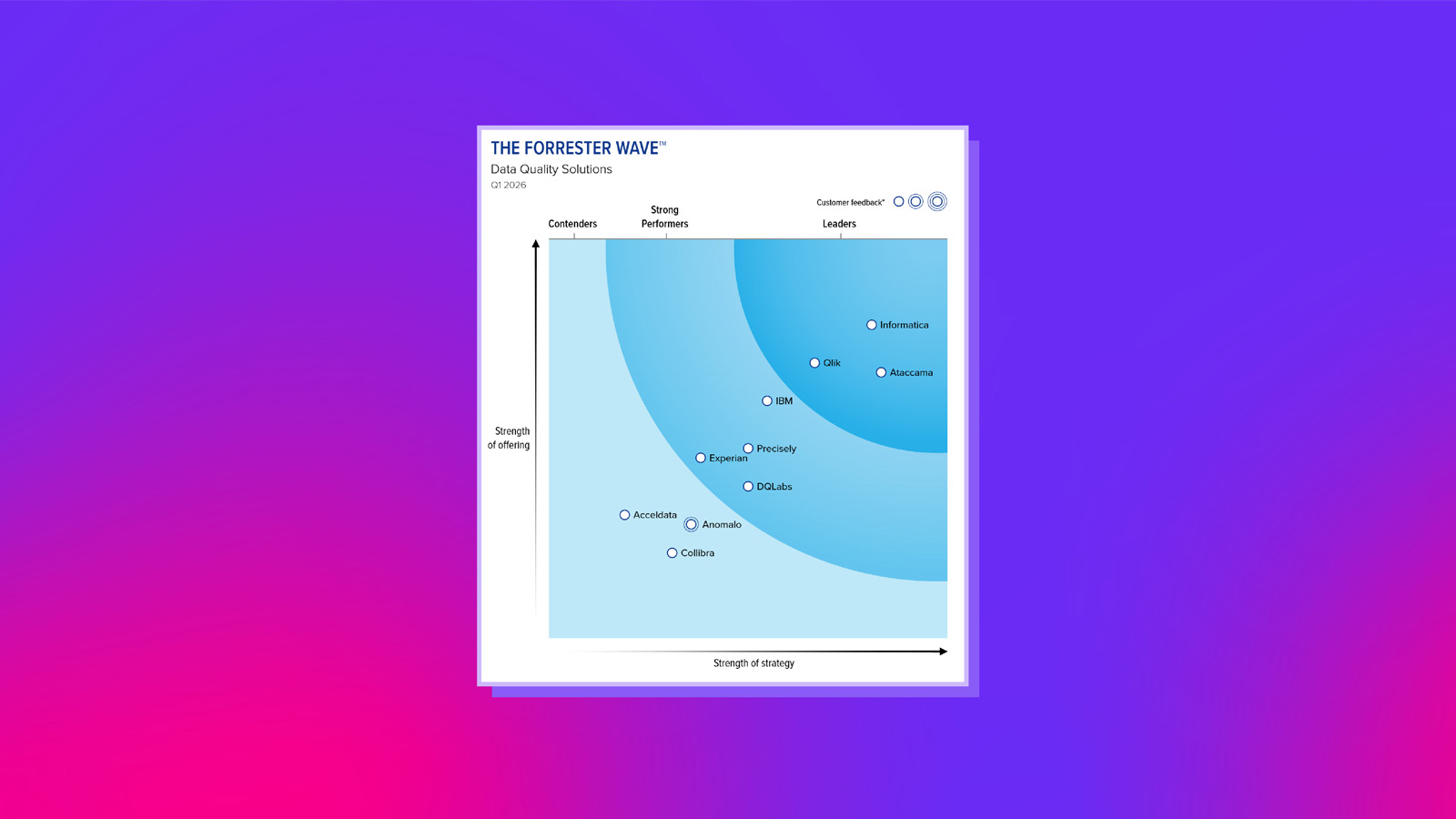
Vendors are positioned visually and grouped into Leaders, Strong Performers, and Contenders, reflecting Forrester’s assessment of relative strengths within the evaluated market.
The Wave is not a feature checklist or a popularity ranking. Scores are derived from structured questionnaires, live demonstrations, analyst evaluation, and direct customer input.
How to read the Forrester Wave™ graphic
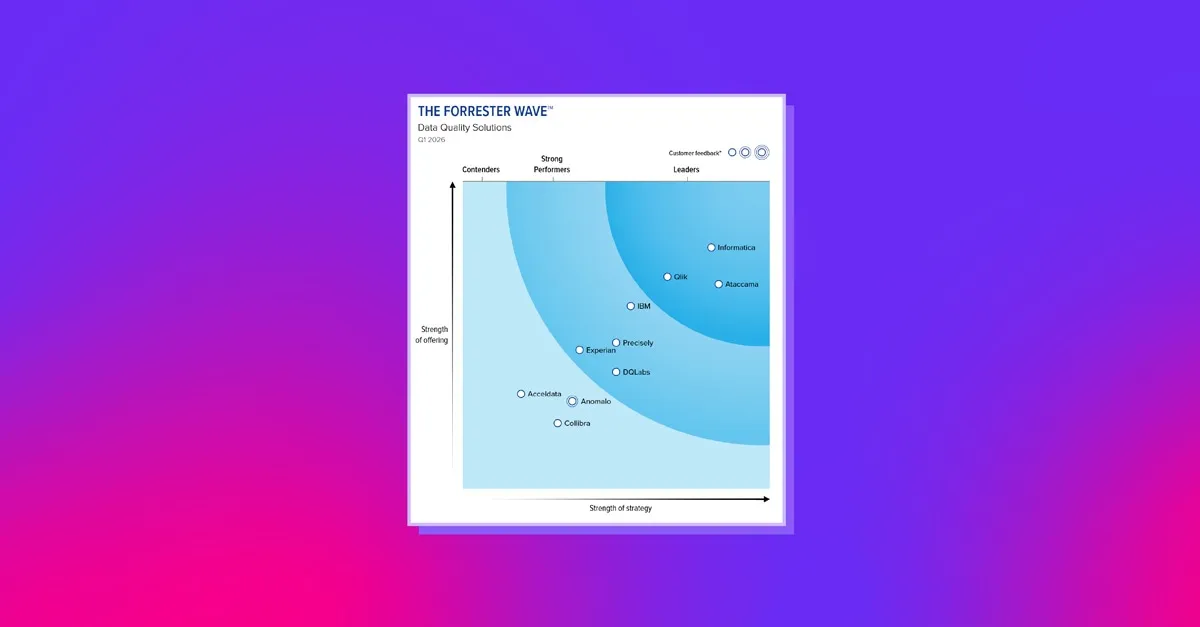
The Wave graphic provides a directional view of the market. The deeper insight sits behind the visual, in the evaluation criteria, weightings, and written analysis that explain why vendors are positioned where they are.
While each Wave can vary by category, the graphic generally helps you compare vendors by relative strength across key dimensions.
Forrester Wave™ categories explained
In most Waves, vendors are grouped into three primary Forrester Wave™ categories:
- Leaders: Strong performance across current capabilities and strategy, with evidence of customer value
- Strong Performers: Competitive offerings that may excel in specific areas or serve certain segments well
- Contenders: Providers that meet the market definition but may have gaps in breadth, execution, or enterprise scale
If your stakeholders ask what it means to be a Forrester Wave™ Leader, the answer is less about a badge and more about performance against Forrester’s weighted criteria for that market.
Stakeholders often compare the Forrester Wave report vs. The Gartner Magic Quadrant when evaluating enterprise data quality vendors.
Why the data quality Wave report matters right now
Data quality has become an AI risk factor
Data quality is no longer only about reporting accuracy or operational efficiency. It is now a core dependency for AI-driven and agentic operating models.
Agentic systems act autonomously based on the data and instructions they receive. There is no human checkpoint to catch errors, inconsistencies, or drift after decisions are made. In this environment, poor data quality introduces systemic risk rather than isolated inefficiency.
We believe Forrester’s decision to publish a dedicated data quality Wave report reflects this reality. Trusted, high-quality data is the foundation for safe, scalable, and reliable AI.
The market has moved beyond point solutions
Most large enterprises already use some form of data quality tooling. Yet many continue to experience broken pipelines, unreliable analytics, and AI initiatives that fail to scale.
The issue is rarely tool coverage. It is operating model maturity.
Modern data quality must function across:
- Cloud, hybrid, and on-prem environments
- Analytical and operational platforms
- Centralized and domain-owned data
- Technical teams and business users
This Wave reflects Forrester’s view that data quality must operate as a continuous, governed discipline rather than a collection of isolated checks or stitched together point solutions.
How vendors are evaluated in the Forrester Wave™
The Forrester Wave evaluation process is intentionally rigorous and structured.
It typically includes:
- Detailed questionnaires with strict evidence requirements
- Live strategy briefings and product demonstrations
- Reference customer interviews conducted by Forrester
- Weighted scoring across all evaluation criteria
- Vendor reviews focused on factual accuracy
Vendors are assessed along two primary axes: current offering and strategy.
What Forrester evaluates in data quality solutions
The Forrester Wave™: Data Quality Solutions, 2026 evaluates enterprise-grade platforms, with a strong emphasis on solutions that can operate across complex and heterogeneous data ecosystems.
Only generally available capabilities are scored. Customer feedback plays an increasingly visible role in vendor representation.
Current offering: Can the platform run data quality at scale?
The current offering dimension evaluates whether a solution can consistently discover, measure, and improve data quality across the enterprise.
Key capability areas include:
- Discovery & understanding: Profiling, classification, metadata integration, lineage
- Controls & improvement: Rules, validation, cleansing, matching, remediation
- Operations: Monitoring, anomaly detection, observability, workflows, stewardship
- Enterprise readiness: Security/privacy, connectivity, deployment flexibility, scalability, UX for technical and business users
Forrester places strong emphasis on operational proof. Vendors must demonstrate how data quality works end to end, from discovery through remediation and measurement.
Strategy: Is the vendor aligned with AI-ready data quality?
The strategy dimension evaluates whether vendors are building toward where Forrester believes data quality is headed.
This includes:
- Clarity and credibility of long-term vision
- Evidence of sustained innovation
- Roadmap realism and execution
- Strength of partner and services ecosystem
- Adoption enablement and value realization
- Supporting services that scale beyond pilots
Increasingly, this assessment focuses on AI readiness, including automation, governance, and the ability to embed quality controls directly into data and AI workflows.
AI-ready and agentic data quality in practice
A notable theme in this Wave report is the growing role of AI and agentic capabilities within data quality platforms.
Forrester highlighted Ataccama’s leadership in embedding AI and agentic capabilities directly into data quality workflows, enabling automation and self-service at scale while maintaining governance and control.
As noted in the research, “its innovations reflect its strengths in embedding AI and agentic capabilities for automation and self-service, supported by educational resources that accelerate adoption.” This underscores the need for data quality platforms that can support autonomous systems, not only human-driven processes. As noted in the research:

This underscores the need for data quality platforms that can support autonomous systems, not only human-driven processes. For enterprises moving toward agentic operating models, data quality must be proactive, automated, and deeply integrated to avoid becoming a bottleneck to AI scale.
How to use this Forrester Wave report in a buying decision
The Wave graphic alone is not the answer. Used properly, this research helps data leaders translate analyst criteria into a vendor shortlist and a practical evaluation plan.
- Understand how Forrester defines modern data quality
- Identify which capabilities are expected versus differentiated
- Align internal priorities with market direction
- Validate assumptions before deeper evaluation
- Inform RFPs, shortlists, and architectural decisions
The value lies in reading beyond the visual and engaging with the full analysis.
Forrester Wave report vs. Gartner Magic Quadrant
Stakeholders often compare the Forrester Wave report vs. the Gartner Magic Quadrant.
A practical way to frame the difference:
- The Wave emphasizes scored criteria and weightings that help you understand how vendors were evaluated.
- The Magic Quadrant emphasizes market positioning through “ability to execute” and “completeness of vision.”
The methodologies and outputs of the two reports are different. You can find Ataccama as a Leader in the Gartner Magic Quadrant as well. See the report.
What you get by downloading the full Forrester Wave™ report
The full report provides depth that cannot be captured in a single graphic, including:
- Detailed vendor profiles and analyst commentary
- Scored criteria across current offering and strategy
- Market trends shaping the evolution of data quality
- Insight into how data quality underpins AI, governance, and trust
- Guidance for matching platforms to enterprise maturity and use cases
For organizations investing seriously in AI and data-driven decision-making, this context is essential.
Download the Forrester Wave™: Data Quality Solutions, 2026
If data quality is becoming a strategic priority in your organization, the Forrester Wave offers a clear and structured view of the market.
Access the full Forrester Wave™ report to explore the complete evaluation, understand vendor trade-offs, and ground your decisions in independent analyst research.
This Wave is not about picking a winner. It is about choosing a data quality foundation that can support trusted data, autonomous systems, and AI at enterprise scale.
FAQs
- What is a Forrester Wave report, and why does it matter?
- A Forrester Wave report is an analyst evaluation that scores vendors against published criteria and weightings, helping buyers compare options using a consistent methodology.
- How is the Forrester Wave report scored?
- Forrester scores vendors across current offering, strategy, and customer feedback using questionnaires, demos, analyst review, and customer references – then publishes scores and supporting analysis.
- What do “Leaders,” “Strong Performers,” and “Contenders” mean in the Forrester Wave?
- These are the main Forrester Wave categories that group vendors by relative strength in the evaluated market based on Forrester’s weighted scoring.
- How should I use the Forrester Wave report to build a vendor shortlist?
- Map your use cases, translate criteria into requirements, weight priorities in an RFP scorecard, and validate fit through a proof‑of‑value using real data and constraints.
David Kolinek
David is our VP of Product Marketing at Ataccama, with 8 years of experience in the Data Management space. He previously served as VP of Product for the Data Governance Suite and held roles at Socialbakers (now Emplifi). He holds a Master’s in Information Systems and Technologies from the Prague University of Economics and Business.