Building trust in the age of AI agents: Takeaways from the podcast with Deloitte and AWS
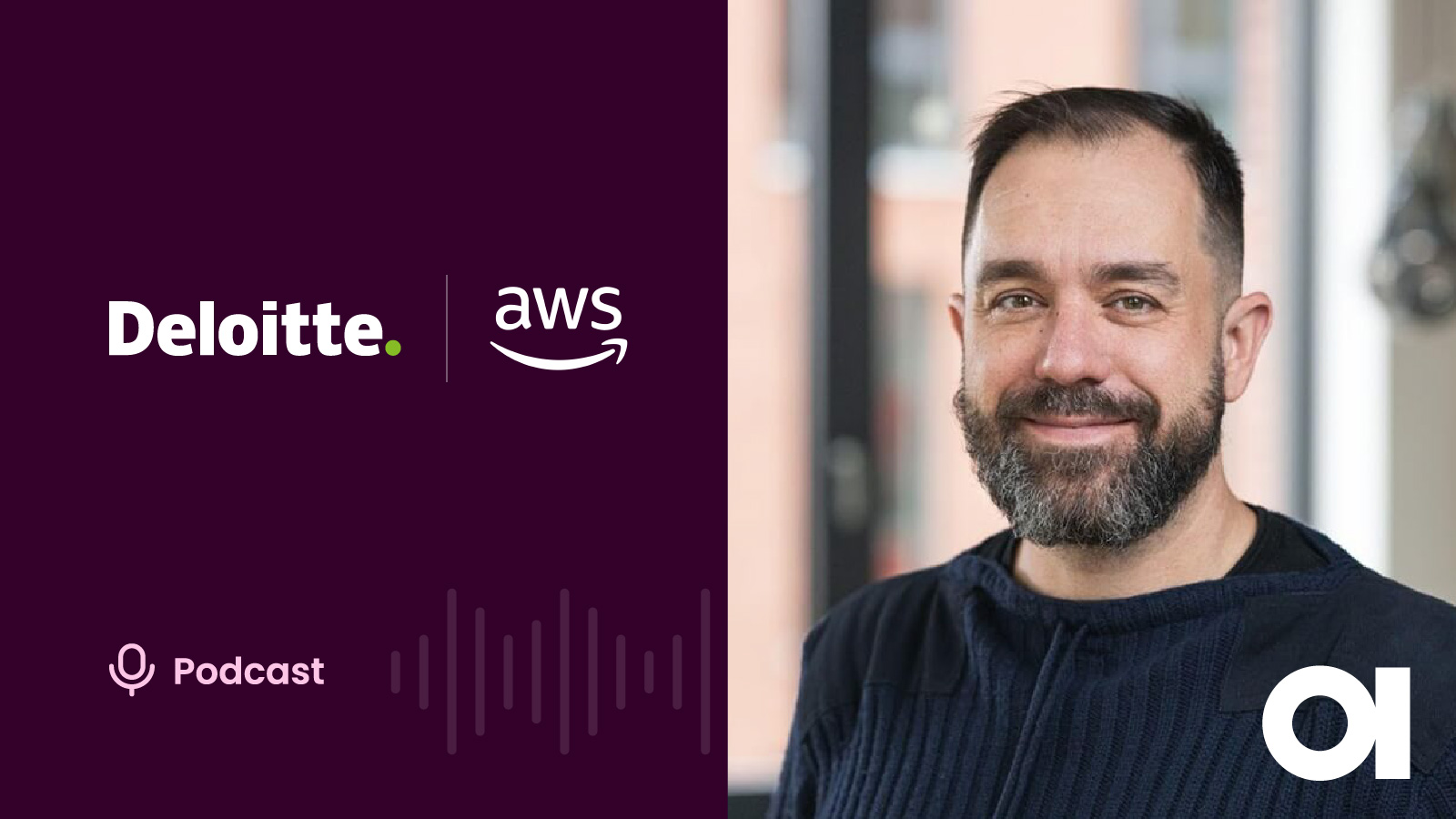
The buzz at the recent AWS Cloud Day in Prague was electric, with over 2,700 participants gathering to discuss the future of the cloud. Amidst the croissants and coffee, our CTO, Martin Zahumensky, sat down with Donovan Spronk and Vyasaraj Kulkarni, hosts of the Generative Edge podcast, a weekly series by our partners AWS and Deloitte, to discuss a critical evolution in the industry: the shift from experimental AI to scalable, trusted agentic workflows.
As organizations move beyond the initial hype of Generative AI, they are facing a new reality. It is no longer just about chatting with a Large Language Model (LLM); it is about enabling autonomous agents to execute complex tasks reliably.
Here are the key takeaways from Martin’s conversation with our partners at Deloitte and AWS.
The challenge of unstructured data
For the last decade, data management has largely focused on structured data, democratizing access to rows and columns through catalogs and governance tools. However, as Martin pointed out during the episode, approximately 85% of client data is unstructured, consisting of documents, videos, and images.
This represents a massive shift. AI models shine when processing unstructured information, but they introduce significant governance hurdles. Organizations are asking valid questions: Did the model use the right report? Is this financial data up to date? Was private information stripped out?
To scale AI, companies must replicate the governance rigor they applied to structured data and apply it to the unstructured world, ensuring AI agents can access trusted, high-quality data without hallucinating or leaking sensitive info.
From reactive chatbots to proactive agents
We are witnessing a transition from reactive compliance to proactive assistance. Martin shared our vision for the future where agents act as proactive stewards. Instead of a user manually checking if data meets BCBS regulations, an AI agent could monitor daily work and advise: “I found duplicates,” or “You need to adjust these rules because new data has come in.”
However, for an agent to be useful, it must understand the context of the data it uses. This is where Ataccama’s role as a trust layer becomes critical.
Martin described how we act as a Model Context Protocol (MCP) server. When an agent searches for “customer information,” it shouldn’t just guess which of the 10 available tables is correct. Using our metadata, the agent can identify the dataset with the highest Trust Index, one that is validated, owned by a specific steward, and used by downstream applications, ensuring the output is accurate and reliable.
Redefining software engineering
One of the most compelling parts of the discussion centered on how AI is reshaping the software development life cycle (SDLC). Martin shared a story about a CEO who, despite not being a developer, contributed production code using AI tools.
Skeptical but curious, Martin put this to the test himself. Using Sourcegraph’s Amp, he successfully coded a “dark mode” for an application in just 90 minutes, a task that would typically require significant engineering resources. He also built a functional PagerDuty clone with SMS notifications in a single evening using Replit.
This suggests a future where the SDLC is ten times faster, where product designers, managers, and engineers can sit in a room and iterate on functional code in real-time rather than spending weeks on specifications.
Traditional vs. AI-native development
To better understand the impact of AI on development timelines, we’ve broken down the comparison Martin highlighted during the podcast.
| Traditional development cycle | AI-augmented development | |
|---|---|---|
| Timeline | 6 to 12 weeks for design, specs, and iterations | Functional prototypes in days or even hours |
| Process | Linear: Requirements → Design → Coding → Review | Collaborative: Iterating on the code base directly in real-time |
| Skillset | Specialized backend/frontend roles | “Super full-stack” developers who understand business, design, and engineering |
| Barrier to entry | High technical proficiency required | Lower barrier; executives and non-engineers can contribute to code |
Leadership advice: get your hands dirty
For C-suite executives and leaders, Martin’s advice is simple: you cannot lead this change from the sidelines. “You need to try it yourself,” Martin urged.
It is not enough to read about AI trends. Leaders need to experiment with the tools personally, whether it is generating images or attempting to code, to truly grasp the capabilities and limitations of the technology. Only by “getting your hands dirty” can you set realistic expectations and drive the cultural change required to adopt agentic AI successfully.
Want to dive deeper?
For more insights on how Ataccama is powering the AI data cloud with our partners at Deloitte and AWS, listen to the full episode of The Generative Edge.
Frequently asked questions
What is the role of data quality in agentic AI? Data quality is the foundation of trust for AI agents. Without a “Trust Index” or metadata that describes the lineage, freshness, and accuracy of data, AI agents cannot distinguish between verified sources and outdated drafts. This leads to hallucinations and unreliable outputs.
How does Ataccama support AI agents? Ataccama exposes a Model Context Protocol (MCP) server that provides AI agents with deep metadata about data assets. This allows agents to query not just the data, but the context of the data, knowing which datasets are trusted, governed, and compliant before using them to generate answers.
Will AI replace software engineers? Not exactly, but the role will evolve. As Martin noted, we will likely see the rise of “super full-stack” developers who combine business logic with engineering. While AI can handle bulk coding tasks, human expertise is still required for complex architecture, security, and refining the “last mile” of code to make it production-ready.
David Lazar
David is the Head of Digital Marketing at Ataccama, bringing eight years of experience in the data industry, including his time at Instarea, a data monetization company within the Adastra Group. He holds an MSc. from the University of Glasgow and is passionate about technology and helping businesses unlock the full potential of their data.